Engaging People with Lived Experience
Lived experience refers to the unique, personal knowledge and understanding gained from having directly experienced something, as opposed to learning about it from books, media, or others. It encompasses the full range of an individual’s perceptions, feelings, context, and the meaning they derive from their interactions and experiences. Lived experience is crucial for ensuring that policies and plans are not only evidence-based but also rooted in the lived realities of the people they are intended to serve.
People with lived experience offer valuable perspectives and practical realities that may not be evident through traditional data analysis or research. Engaging people with lived experience can help identify gaps, unintended consequences, and areas for improvement in existing policies and plans. Involving individuals with lived experience in planning and policy-making process can foster trust and engagement among those who will be affected and provides a wider range of voices and experiences, ensuring that policies are not narrowly focused on specific groups or perspectives.
Understanding the practical realities of a policy from a lived experience perspective can help ensure that it is implemented effectively and in a way that is sensitive to the needs of those it affects. By giving voice to those who are often marginalized or excluded from decision-making processes, lived experience can help ensure that policies are fair, equitable, and responsive to the needs of all.
See below examples of methods which can be used to engage people with lived experience, with local examples of the methods in action along with advisory notes.

Narrative interviews are a qualitative research method where participants share their personal stories, experiences, and meanings related to a specific topic or event. They are particularly valuable for engaging with lived experience because they prioritize the participant’s perspective and allow them to narrate their story in their own words. This approach emphasises the participant’s voice and allows them to shape the narrative, rather than being guided solely by the interviewer’s questions.
In Action


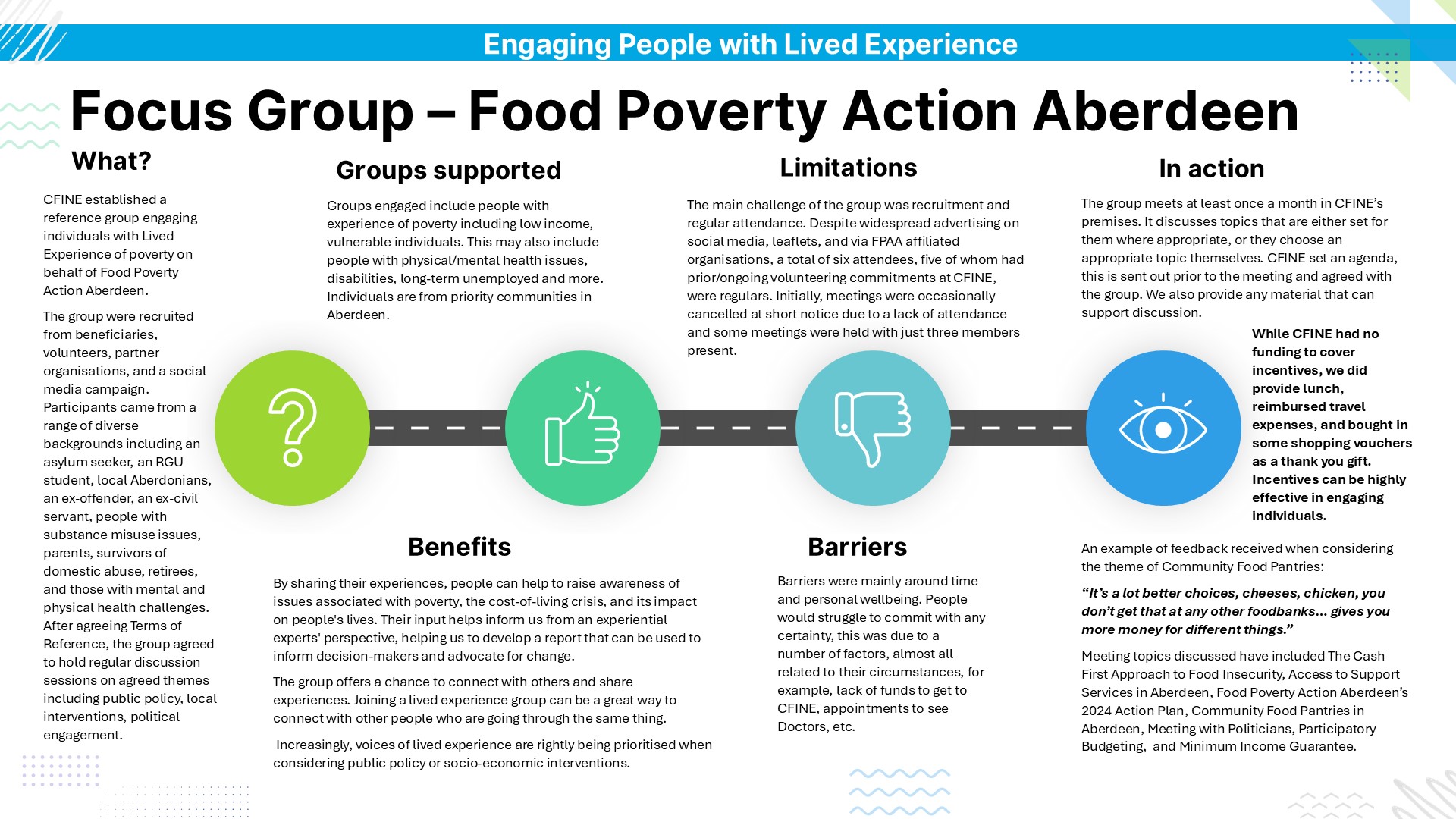
Focus groups effectively engage lived experience by facilitating group discussions where participants share their thoughts, feelings, and perspectives on a specific topic. This method allows for the exploration of diverse viewpoints and the uncovering of ideas that may not emerge in individual interviews. Focus groups can also be used to create a safe and trust-based space for sharing sensitive stories, particularly when engaging with marginalized groups.
In Action


Community media engages lived experience by providing a platform for individuals to share their stories, perspectives, and expertise in various formats, such as films, podcasts, radio shows, and online platforms. This approach fosters a sense of ownership, empowers individuals to participate in media production, and ensures that diverse voices are heard.
In Action


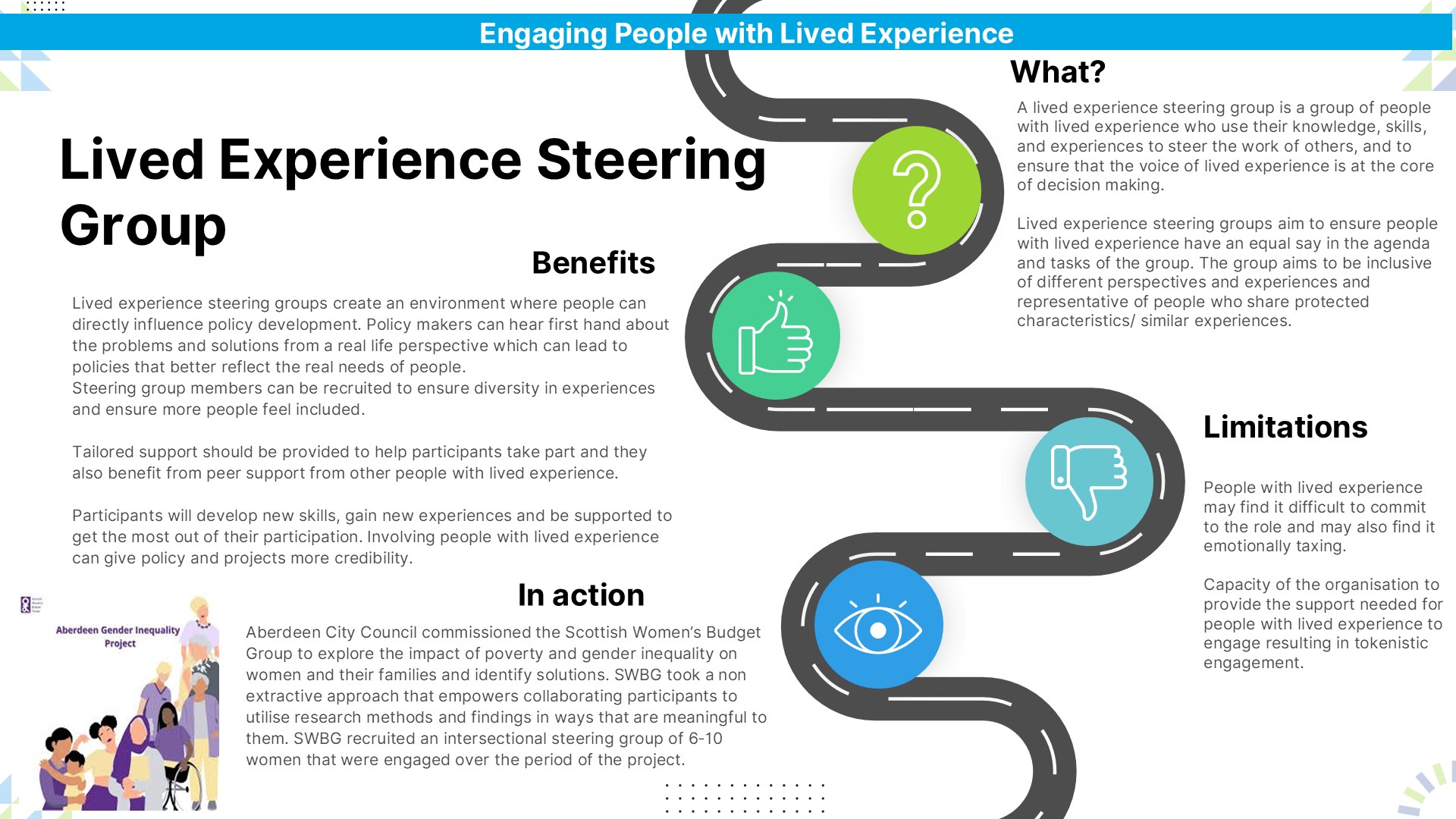
Co-design, when used in the context of engaging lived experience, involves bringing together people with direct experience of a situation (e.g. a particular circumstance, a service, a policy) alongside experts and other stakeholders to collaboratively design solutions or interventions. This approach recognizes that people with lived experience are experts in their own lives and can offer valuable insights that are not readily available to others.
In Action


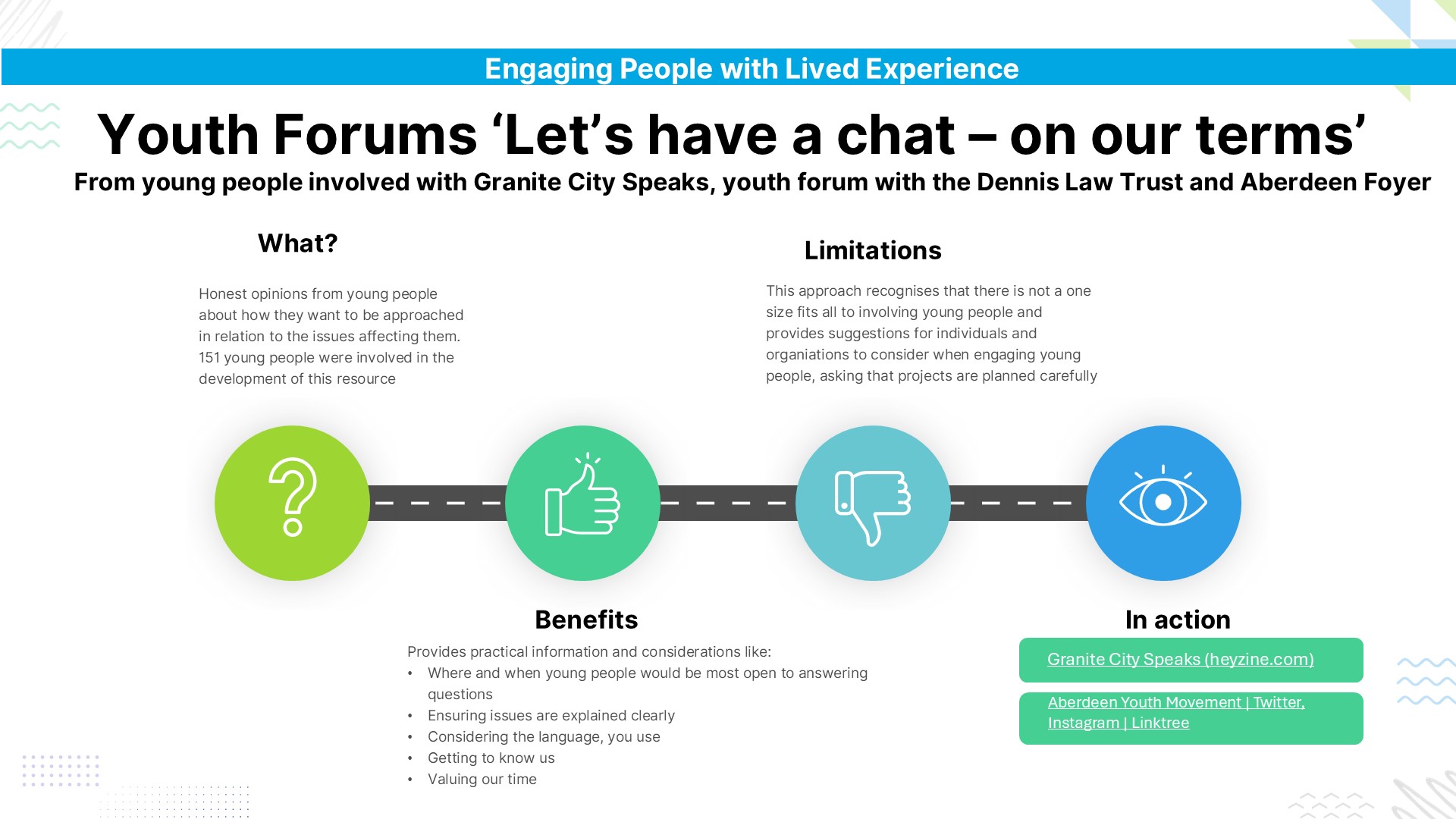
Youth forums are used to engage lived experience by providing platforms for young people to share their perspectives and expertise on topics that affect them. These forums can influence decision-making, shape policies, and improve services that directly impact young people.
Youth forums allow young people to share their lived experiences, providing valuable insights into issues like mental health, education, and social justice. This first hand knowledge can be crucial in identifying gaps in services, understanding the needs of young people, and developing effective solutions. Young people can offer advice, suggestions, and feedback on policies and programs, ensuring that they are relevant and beneficial to their communities.
In Action