
I am looking to take action in my local community
Do you have a great idea that you think could transform your community?
Are you looking for some inspiration?
This toolkit has lots of ideas and tips about where you can start making a difference in your community today!
Knowing where to start when looking to take action in your community can sometimes feel daunting and confusing.
As a useful starting point, you may want to consider the following:

Your local Community Council
Community Councils are bodies that play a vital role in representing the views of the community to local authorities and other public bodies. Their term of office is 3 years. They have no executive powers but are statutory consultees on planning and licensing matters.
Anyone 16 years of age and over who lives in the Community Council area and whose name is on the electoral register can be nominated or apply to become a Community Councillor.
Place planning
Individuals, communities and organisations can shape their local areas in different ways. You can find out more about where to start by visiting the place planning pages on Aberdeen City Council’s website.
You can also email localityplanning@aberdeencity.gov.uk for assistance and advice.

Volunteer Aberdeen
You can find out about a wide range of volunteering opportunities through Volunteer Aberdeen
Community Organising is the work of bringing people together to take action around common concerns and overcome social injustice.
Social action is the collective effort to improve people’s well-being, deepen democracy and develop community life and commitment to others. It involves the building of networks and relational power (the power of people working together), the facilitation of collective action and the cultivation of a just and caring society.

Community Organisers Guide
This helpful guide provides an overview of community organising, including what it is and the types of organising you could undertake.

The Young Placechangers
Aims to inspire young people to take the lead in their local community, voice their opinions, and help make positive change happen.

The Place Standard Tool
The Place Standard tool provides a simple framework to structure conversations about place. It allows you to think about the physical elements of a place (for example its buildings, spaces, and transport links) as well as the social aspects (for example whether people feel they have a say in decision making).
There are 32 Third Sector Interfaces (TSI’s) in Scotland, one for each local authority area. Some are partnerships working across large urban and geographical areas. Some combine all the functions of the TSIs’ work under one roof.
TSI’s are a great place to start if you are looking to set up a new group.
The third sector includes charities, community groups, development trusts, social enterprises and the volunteering sector.
The key functions of the TSIs is to help the third sector in each area in the following ways:
- Build capacity
- Be a source of knowledge
- Connect partners
- Be the voice of the Sector

The Aberdeen Council of Voluntary Organisations (ACVO)
The TSI for Aberdeen is the Aberdeen Council of Voluntary Organisations (ACVO)
tsiMoray
The TSI for Moray is tsiMoray

Directory of Community Groups for Engagement & Participation
This resource has been developed by the Aberdeen Equalities Participation Network, to improve engagement with equality-related groups and organisations in the City. Groups are listed by characteristic and may be listed in two or three categories if relevant.
Do you need funding to support your project? Many projects can be run with surprisingly little funding. You may find that goods, venues and people’s time are the most valuable resources.
If you are considering applying for funding, you might want to try linking in with other groups to help you apply and manage funding. Here are some useful starting points if you are looking to fund a project:
Aberdeen Council of Voluntary Organisations (ACVO)
Have lots of useful information on funding support, including where to start, how to find funding sources and how to complete funding applications.

NHS Grampian Community Grants Programme
Supports local charities and community organisations across the Grampian region to develop projects which improve access to health provision, enhance healthcare experiences, and empower individuals to better manage their health

Health Improvement Fund
Supports initiatives that improve health and wellbeing for people across Aberdeen.

NESCAN (North East Scotland Climate Action Network)
Involved in a range of funding opportunities aimed at empowering communities and organisations to create and develop climate action and biodiversity projects.
Participatory Budgeting (PB)
About local people having a direct say in how public money is spent. PB can support active citizenship, helping build more active and stronger communities that are:
- Better able to make decisions on where public funds are spent
- More likely to take part in community activities
- Better informed about public budgets and decision-making
Are you interested in taking ownership of a community asset (land or buildings) to support a project?
Community Asset Transfer involves the transfer of management and/or ownership of land and buildings from a public sector body, such as a council, to a community-based organization.
Examples of community-based organisations include local charities, local community groups, and community-based social enterprises.
Find out more about community asset transfers:
ACVO
Community Asset Transfers

Community Ownership Support Service
Works with communities who want to own land or buildings in Glasgow and the Clyde Valley

Development Trust Association Scotland
Communities all over Scotland are setting up development trusts to help their neighbourhoods flourish through community-led activity, partnership working and enterprise
Public services should be putting processes in place to consult, engage and involve communities in decision making. However, if you feel you haven’t been able to participate on an issue you feel strongly about you can make a Participation Request to a public service.
Participation requests were introduced under the Community Empowerment (Scotland) Act. They are a new means by which community groups can request to have greater involvement in, and influence over, decisions and services that affect communities and community life.
Participation Requests
More information about participation requests and how you can make one.

Participation Request Resource Pack
Scottish Community Development Centre (SCDC) has also produced a helpful guide.
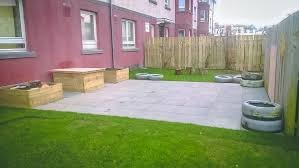
Case Study – Tillydrone Community Flat
In 2019, Tillydrone Flat Association submitted a participation request to the Aberdeen City Council in order to prevent the relocation of the community flat to a new community campus.
Participation Requests in 60 seconds
Are you looking for research and/or data to help inform your idea or project? Here are some useful resources as a start point:

Aberdeen City Population Needs Assessment
The evidence base for the Aberdeen City Local Outcome Improvement Plan.

Aberdeen Local Development Plan (LDP)
Used to guide decisions on planning applications in Aberdeen City.

Health Determinants Research Collaborative Aberdeen
Presents a range of data for Aberdeen City and the North East of Scotland which is relevant for exploring the wider determinants of health.
Aberdeen City Council Open Spatial Data Portal
Aberdeen City Council’s public platform for exploring and downloading open spatial data, discovering and building apps, and engaging to solve important local issues.

National Records of Scotland (NRS)
Publish a wide range of statistical data about the people and population of Scotland, including Scotland’s census.

Scottish Public Health Observatory (ScotPHO)
Presents a range of indicators to give an overview of health and wellbeing at a local level.

Community Research
Community Research is a form of Participatory Action Research. It is a dynamic and transformative approach to undertaking research that involves community members in the entire research process.
Each local authority (or council) in Scotland is made up of councillors who are directly elected by the residents of the area they represent. There are 1,226 elected councillors in Scotland, who are normally elected every five years.
Councillors’ Roles
The key roles taken by councillors are:
- Representing their ward: Representing and meeting with the residents and interest groups within their ward and dealing with issues that they raise. In addition, councillors may attend community council meetings and serve on forums through which local issues can be discussed between elected members, council officers, and the wider community.
- Decision-making: Councillors attend full meetings of the council, and some may have specific roles in relation to policy-making, delivery of services, and use of resources.
- Scrutiny of decisions: Councillors may serve on scrutiny panels or committees which scrutinize existing policies and service delivery.
- Regulatory functions: Some council committees deal with things like planning and licensing applications.
From time to time, councillors may also be involved in other areas, such as the development of new policies for the council.
You can find out who your local councillor is in Aberdeen City here.
You can get involved with a a wide range of community decision spaces including:
Community councils
Play a vital role in representing the views of the community to local authorities and other public bodies.
Volunteer Aberdeen
List a range of volunteering opportunities across Aberdeen.

A Local Information System for Scotland (ALISS)
Can help you find community groups by location and area of interest (for example, mental wellbeing).
Place Planning
individuals, communities, and organisations can shape their local areas in different ways. You can also email localityplanning@aberdeencity.gov.uk for assistance and advice.

Locality Empowerment Groups
Open to any community member or representative of a community group/network living in the area that has an interest in working collectively to improve outcomes for the locality.
Priority Neighbourhood Partnerships
Aim to work together to jointly deliver action to address community priorities.
Getting involved with a Local Outcome Improvement Plan project
Get involved in one of the priority areas, such as protecting the environment and helping reduce poverty.
Aberdeen Youth Movement
“Change starts when a single voice shouts. I feel like we are that voice.”
Aberdeen Youth Movement (AYM) encourages active engagement of young people aged 12-25 years across the Aberdeen. AYM engage with young people face to face or via their social media platforms to seek views on services and how to develop a wider range of opportunities for involvement in the city. AYM organise events that raise awareness of the challenges facing young people of the city.
AYM bring together a wider variety of groups and youth organisations to create a collective voice and view.
Membership of the AYM steering group is open to all young people aged 16-25 who stay in Aberdeen City. AYM is a non-party political and non-sectarian group. AYM aims to be representative of all the different and diverse views of young people of the city.
If you are interested in finding out more about Aberdeen Youth Movement, please contact Brian Webb, Youth Development Officer:
bwebb@aberdeencity.gov.uk
The Community Empowerment (Scotland) Act 2015 aims to help communities to do more for themselves and have more say in decisions that affect them.
The Act also has powers to give community groups money to make them stronger and asks public bodies (such as councils) to make sure they listen to what communities want.
Important parts of the Act:
- Makes Community Planning Partnerships (CPPs) a legal requirement and requires them to involve community organisations at all stages of community planning.
- Enables groups to participate in public service decision-making through Participation Requests.
- Gives community-based organisations the right to request the management and/or ownership of land and buildings from a public sector body (such as a council). This is known as Community Asset Transfer (CAT).
The Guidance on taking a children’s human rights approach helps public authorities and other organisations adhere to children’s human rights. It supports them in meeting current laws that respect children’s rights as defined by the United Nations.
Important parts of children’s human rights are defined in:
- An introduction to the United Nations Convention on the Rights of the Child (UNCRC).
- An introduction to the UNCRC (Incorporation)(Scotland) Act.
Methods to embed children’s human rights approaches in practice:
- decision-making;
- budget allocation;
- inclusive communication;
- awareness raising;
- participation of children;
- child-friendly complaints and advocacy, including case studies, good practice examples and further resources.
Information on the rights of children and young people can also be found on our Community Engagement Toolkit page.

Rights of Children and Young People
The Scottish Government is committed to Scotland being the best place in the world to grow up. A central part of this vision is the recognition of, respect for, and the promotion of children’s rights. These include the right to be treated fairly, to be heard and to be as healthy as possible. This vision requires children’s rights to be embedded in all aspects of society, where policy, law and decision-making take account of children’s rights and where all children have a voice.
Community empowerment is a process where people work together to make change happen in their communities by having more power and influence over what matters to them. Community empowerment enables communities to increase control over their lives.
Communities may:
- Be geographically located
- Share common interests concerns or identities
There is a common belief that the current way of planning and delivering public services is too ‘top-down’, with not enough control and power sitting with communities.

The Putting People First initiative
The “Putting People First” initiative by NHS Grampian aims to enhance community engagement and improve health services in the Grampian area. This approach focuses on collaboration with colleagues and citizens, inviting them to contribute to shaping the future of health and care. It emphasizes listening to the local community and involves a commitment to systemic change in how services are delivered. The initiative is endorsed by the NHS Grampian board and aims to create equal partnerships with the public, guided by principles of collaboration and shared purpose